



Basic Information on Cape Dutch Gables
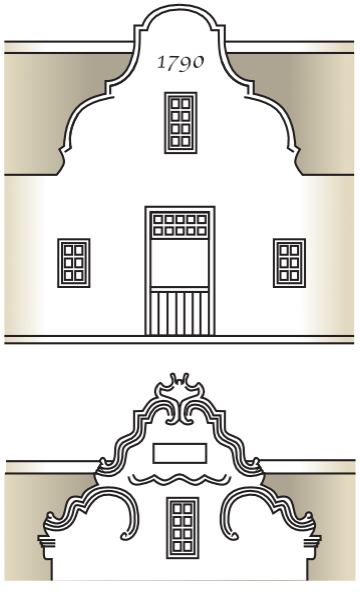
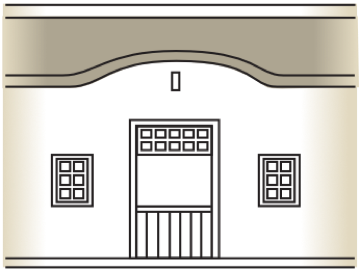
Wolfsneus Gable
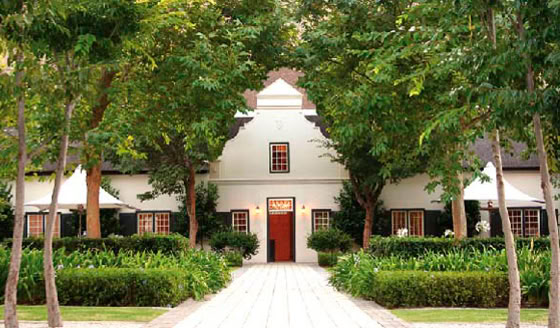
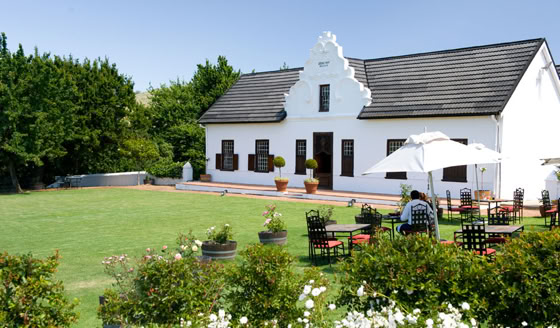
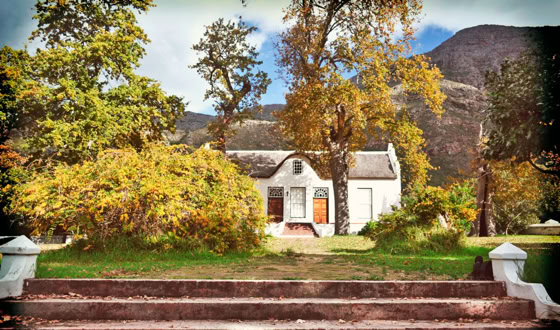
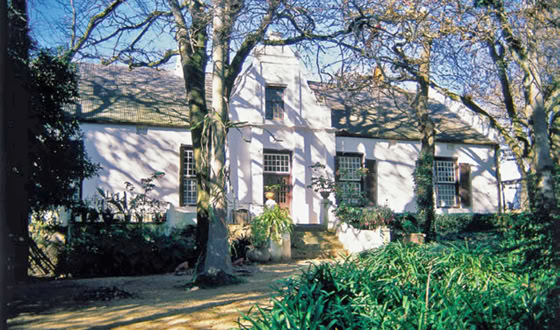
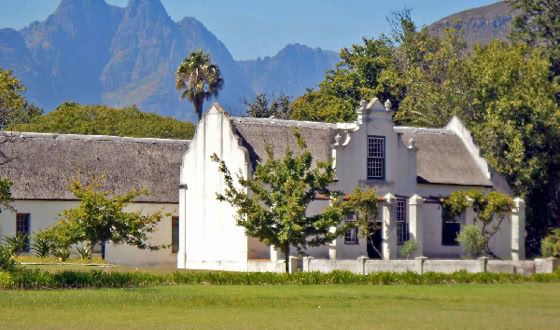
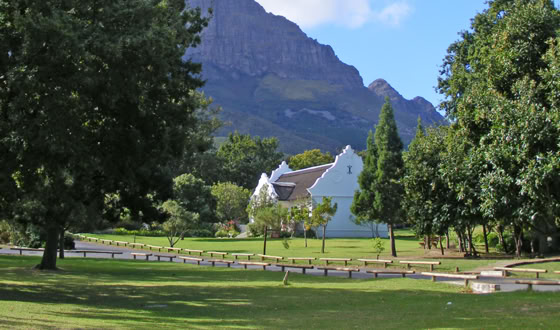
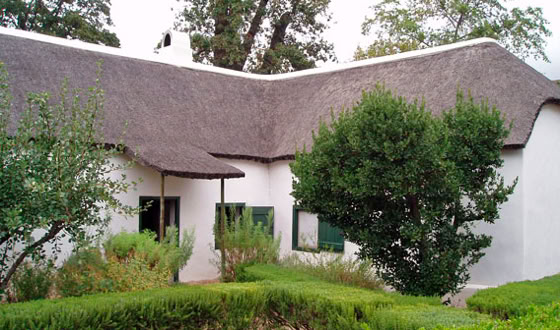
‘Wolf’s nose’ gables were the first front gables to be designed and built as a functional ‘eyebrow’ over a dormer window (to provide light for the loft) above the front door. From this humble gable, based on the medieval architecture of the Netherlands, the style of Cape Dutch gables grew into one of the most recognisable ‘settler’ architectures in the world.
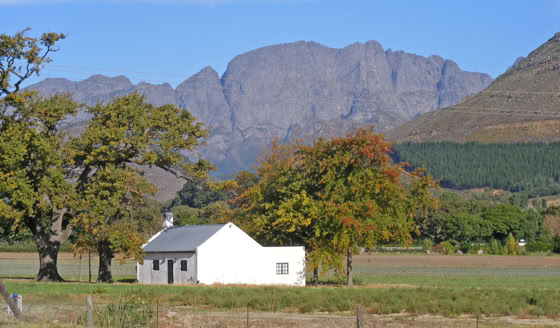
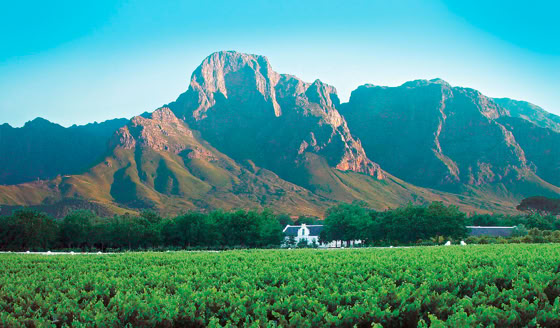
Example: Boekenhoutskloof in Franschhoek and the Cottage at Assegaaibosch Nature Reserve
Holbol Gable
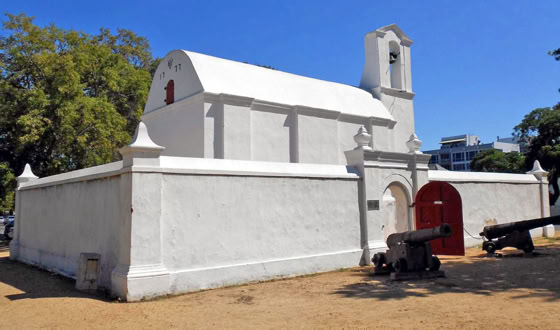
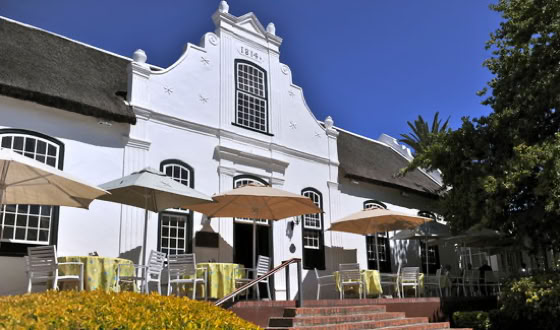
The holbol gable was a natural progression from the earlier bolbol gable as the fashion of the day was moving towards the baroque style. Its defining feature was a mix of convex and concave edges. As this style of gable moved into the baroque style, more sweeping curves, swirls and flourishes were incorporated, ornamentation was added and moulding intruded the gable face for the first time. This style of gable defined the later part of the 1700s, crossing over into the neoclassical period. (The fashionable style used in Europe could take up to 25 years before it was used at the Cape)
Early example: Old Wine Cellar at Spier
Late example: Hazendal on Bottelary Road
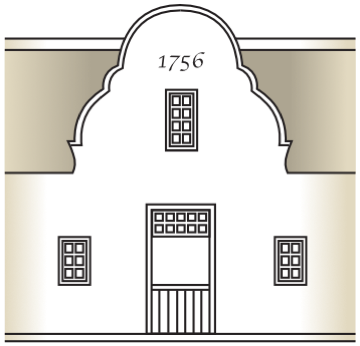
Bolbol Gable
By the mid-1750s, the gables at the Cape had reached their full height, a reflection of the prosperity of the time. From then on, gables would be defined by whether the edge was concave or convex in shape. In the case of the bolbol gable, there was a distinct repeat of the rounded convex shape. Besides allowing light into the loft, gables also allowed escape from the front door if the roof caught fire.
Example: Joostenberg near Muldersvlei (private)
Neoclassic Gable
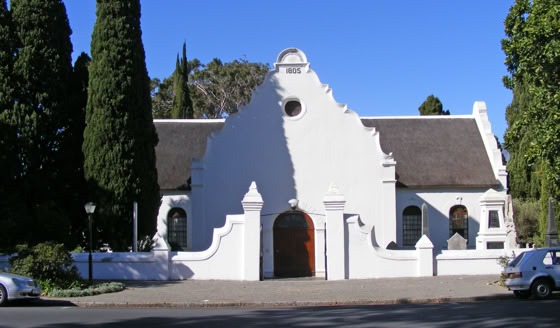
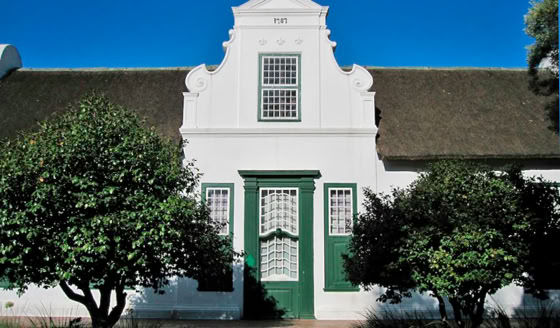
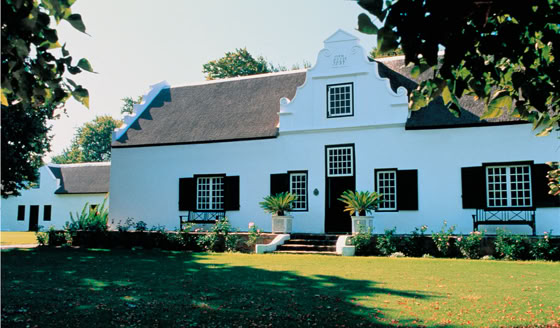
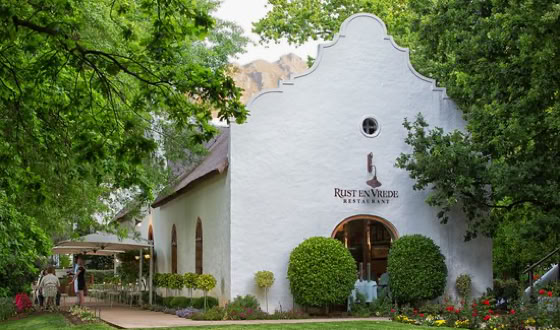
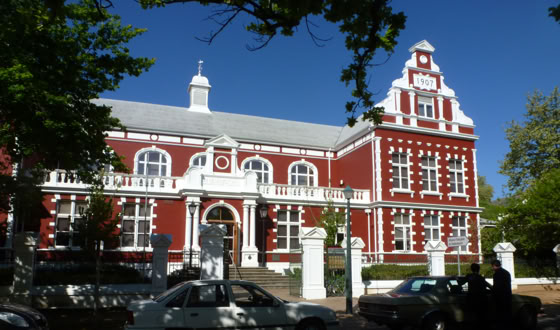
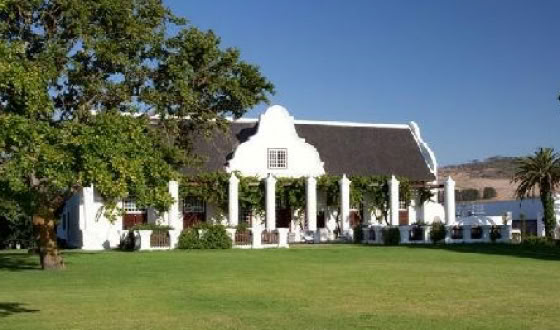
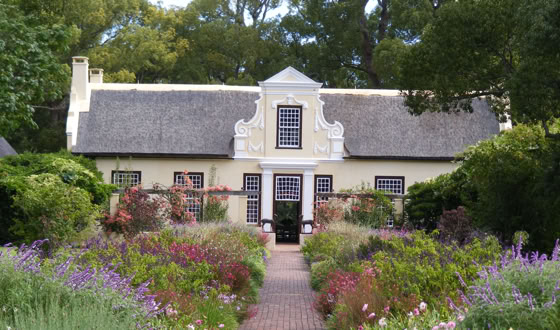
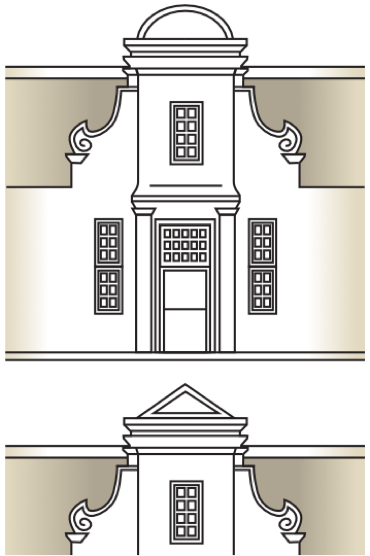
This was the last of the Cape Dutch gable styles before the Second British Occupation of the Cape in 1806. The style could be defined as singularly elegant, restrained and dignified, with minimal ornamentation between the gable edges. Gable-caps might contain urns. The concave shape was generally used and, in some cases, a straight edge. A strongly defined pediment and pilaster are defining features. The pediment could be triangular, rounded or sculpted.
Examples: Zevenwacht, Muratie, Vergelegen and La Motte







www.visitwinelands.co.za
www.capewinelands.gov.za
All information is given in good faith but, as times and facilities may change, the author and publisher cannot be held responsible for any inaccuracies.
Distribution: Go.See.Do • Proofreading: Shelley Woode-Smith Citations available on request
© Richard Smith • Gateway Guides 14th edition 2026



www.gatewayguides.co.za
All Rights Reserved
Contact us if you wish to engage with any of our products
30 Meyer St. Kenilworth, Cape Town, South Africa